 Free Read
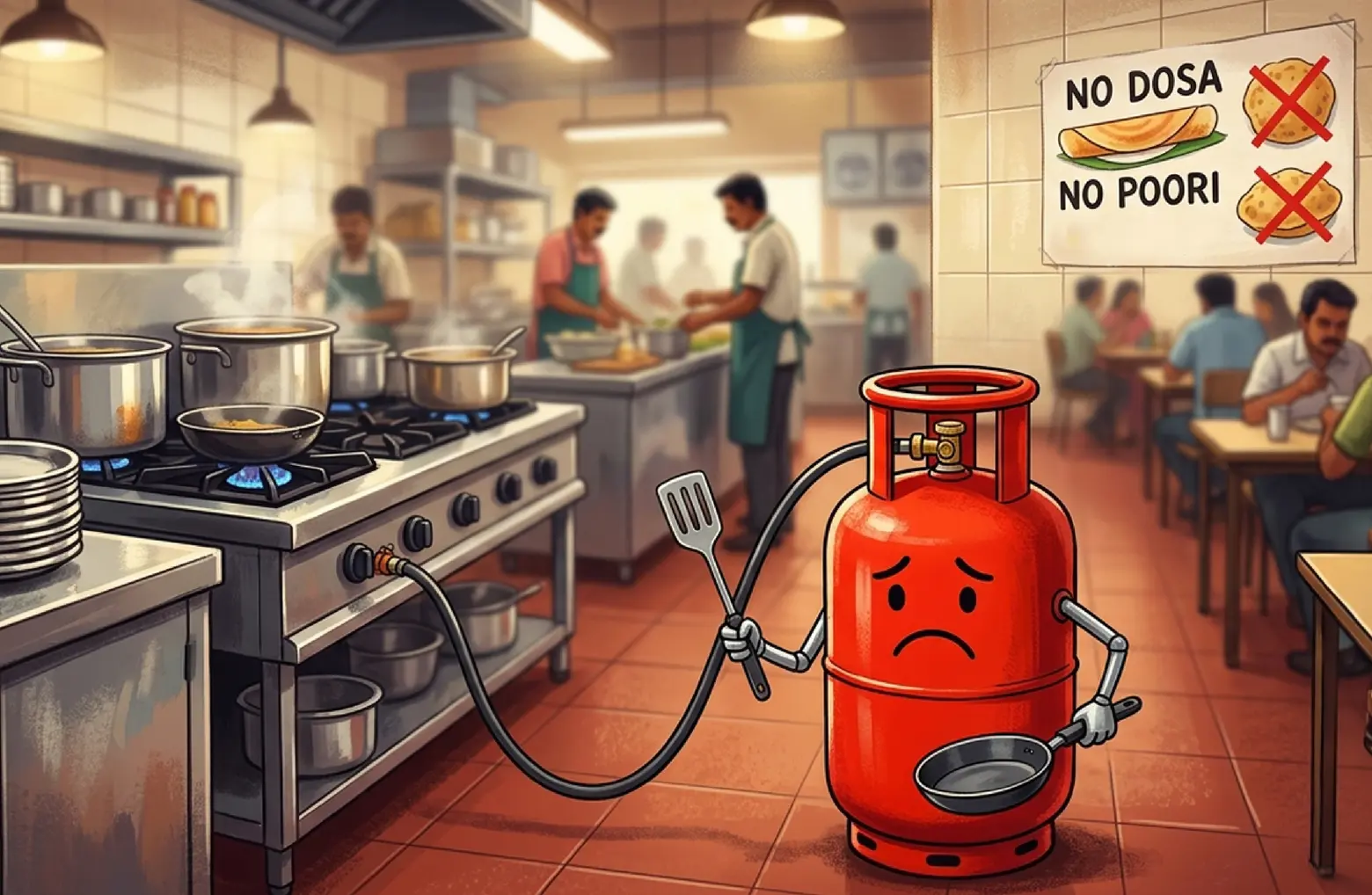
The Hole in the Wall Cafe in Indiranagar, Bengaluru, is a breakfast joint that pulls weekend crowds large enough to spill onto the pavement. Since commercial LPG cylinders crossed Rs 3,000, its kitchen has changed the way it thinks about every flame it lights. “Even if we get one order for a dish, we prepare three and keep it ready,” said Mathew Harris, cofounder. “We know it will sell eventually and this helps us save on gas.”
The complimentary syrup that once came with many breakfast dishes is gone. It is a small cut, barely visible to the diner, but it is one of dozens now being made across the industry. And it captures something larger about how India’s restaurants are responding to the Rs 993-per-cylinder hike: not with drama, but with a series of careful, near-invisible adjustments meant to keep the lights on without startling the customer.
Gas was cheap enough for long enough that many restaurants never had to look too hard at how they used it. Menus were wide, and waste was treated as a cost of doing business. The hike has put an end to that. Restaurants are now hunting for waste with a focus that, by most accounts, should have been there all along. The crisis may yet leave many of them leaner and sharper than they were before it began.

In addition, access 50+ archived articles and 3 new articles every month
Sign In
Got a tip? If you have a lead we should be chasing at The CapTable, write to us at [email protected]
Join our community of 100,000+ top executives, VCs, entrepreneurs, and brightest student minds





Blume Ventures

The CapTable brings a refreshing set of insights for us at the Blume team, highlighting stories that bring together the underlying business and founders with that of investors' journeys with these startups. It's an important perspective that very few bring to startup ecosystem enthusiasts.

Convinced that The Captable stories and insights
will give you the edge?
Convinced that The Captable stories
and insights will give you the edge?
Subscribe Now
Sign Up Now